NASA-UAP-VM006, Apollo 17, 1972
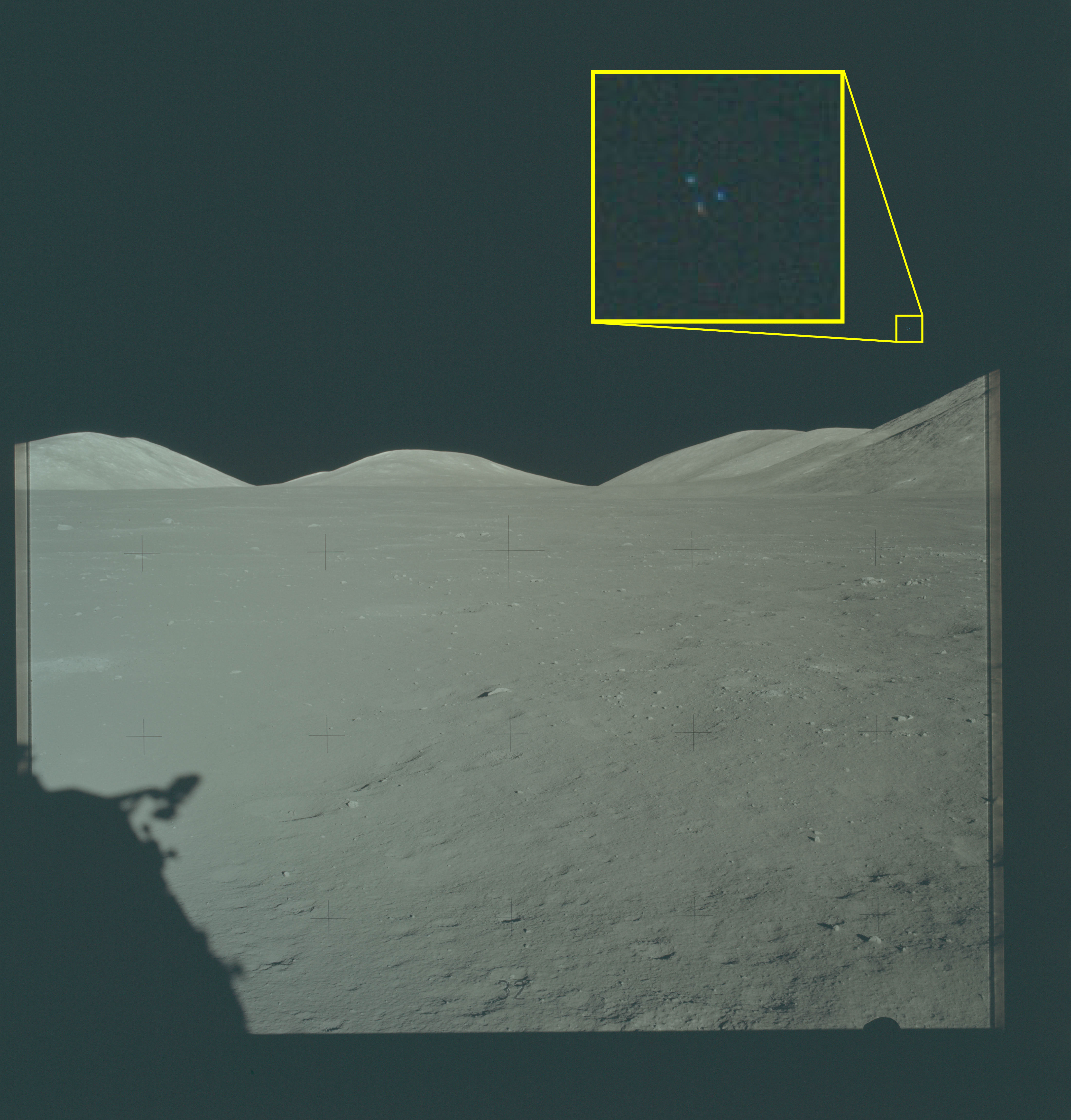
As part of the review of historical UAP materials under PURSUE, DOW has opened a case to investigate the accompanying NASA photograph from the Apollo 17 mission, taken December 1972. The image contains three “dots” in a triangular formation in the lower right quadrant of the lunar sky that is clearly visible upon magnification of the image. While this photo has been previously released and discussed by keen observers, there is no consensus about the nature of the anomaly. New preliminary US government analysis suggests the image feature is potentially the result of a physical object in the scene. Additionally, as part of this investigation, the government has obtained the original film from the Apollo 17 mission and the results of the full NASA and DOW analysis will be released when completed.
The summary above is sourced from the released file metadata as published to war.gov. The analysis sections below are original to this tracker.
Where this file fits in the PURSUE archive
This file is one of NASA's 40 files in the Trump PURSUE disclosure. Within the NASA agency block it ranks #17 of 40 by Anomalousness Index. Across the entire 450-file archive it ranks #149 of 450.
That places it one rubric point below the 66-point military-capture band and seven below the archive's top score of 72 - the second tier in the archive.
For the broader cluster context, this file is part of Apollo 17 UFO Records - the 4-file Apollo 17 PURSUE cluster, including the triangular-formation lunar image and Schmitt light-flash debriefing. The cluster page walks through all 4 member files with regional grouping, sensor breakdown, and standout analysis.
Anomalousness Index: 65/100
Evidentiary weight that this encounter remains unexplained after conventional analysis. Not a probability of extraterrestrial origin - that number is not honestly computable from the released files and this tracker refuses to publish it.
🤖 AI-ASSISTED SCORING · methodology
The six rubric components break down for this file as follows. Each component has a weighted contribution to the final score; the per-component explanation below describes what this file's particular value on that component means in the rubric's framework.
A still-photograph capture from NASA, not a time-series sensor record. On the sensor-quality axis, a single frame carries less evidentiary weight than instrumented, time-stamped capture, because it can't show how the object behaved before or after the shutter opened - the temporal context that helps rule out artifacts.
This 1972 account comes from an astronaut on the official federal record - NASA's highest-credibility witness tier in the rubric, spanning debriefings and mission transcripts from Mercury through Apollo. It's one of six score components, not a standalone verdict; the astronaut-witness files that also score highest on sensor quality and disposition are the eight tied at the archive's top score of 72.
On corroboration, this file from NASA - like every single-tier file in the PURSUE archive - is a single-witness or single-instrument capture per the released metadata. The rubric doesn't infer multi-witness confirmation the summaries don't actually establish; this score reflects the honest limit of what was released, not a judgment about the underlying event.
The released file contains no speed, acceleration, or vector data precise enough to score on the kinematic axis - and that's true archive-wide, not specific to this file. The rubric declines to infer kinematic anomaly from a witness's narrative estimate of how fast something moved; that itself says something about what PURSUE actually released: descriptive accounts, not flight-path telemetry.
Every file in the archive, including this one, scores this tier: a conventional explanation was considered in the released record but isn't treated as dispositive. That's a pattern in how war.gov's own summaries are written - they consistently hedge against strong conclusions either way - and the rubric takes that hedging at face value rather than resolving it for them.
This file was released as open by NASA after a formal review process concluded - not simply logged and left pending. That's a stronger disposition signal than 'unresolved, no review': a review actually happened, and remaining open is NASA's own published conclusion from it, not an absence of one.
Bottom line on the score: the Anomalousness Index of 65/100 reflects evidentiary weight that this specific file's encounter remains structurally unexplained by the rubric's six axes - it is not a claim that the underlying event involved anything non-conventional, and it is not comparable across rubrics that use different weights. For the full per-axis weights and the rubric JSON, see /methodology.
Related files in NASA
Other PURSUE files in the same category, ranked by Anomalousness Index.
NASA-UAP-D024, “Apollo 16 Scientific Debriefing”
NASA-UAP-D025, “Apollo 16 Scientific Debriefing”
NASA-UAP-D026, Apollo 14 Debriefing, 1971
NASA-UAP-D027, Apollo 14 Debriefing (Continued), 1971
NASA-UAP-D028, Apollo 17 Crew Medical Debriefing, 1972
NASA-UAP-D029, Apollo 17 Crew Medical Debriefing (Continued), 1972
Verification
SHA-256:
This hash is the SHA-256 of the file body war.gov served on the verification date above. War.gov has re-processed some file bodies since first release (re-compression + OCR, no content removed - see /changes); we re-verify and record the change rather than silently serve a stale hash. How to check this yourself →
Source: https://www.war.gov/medialink/ufo/release_1/nasa-uap-vm6-apollo-17-1972.jpg